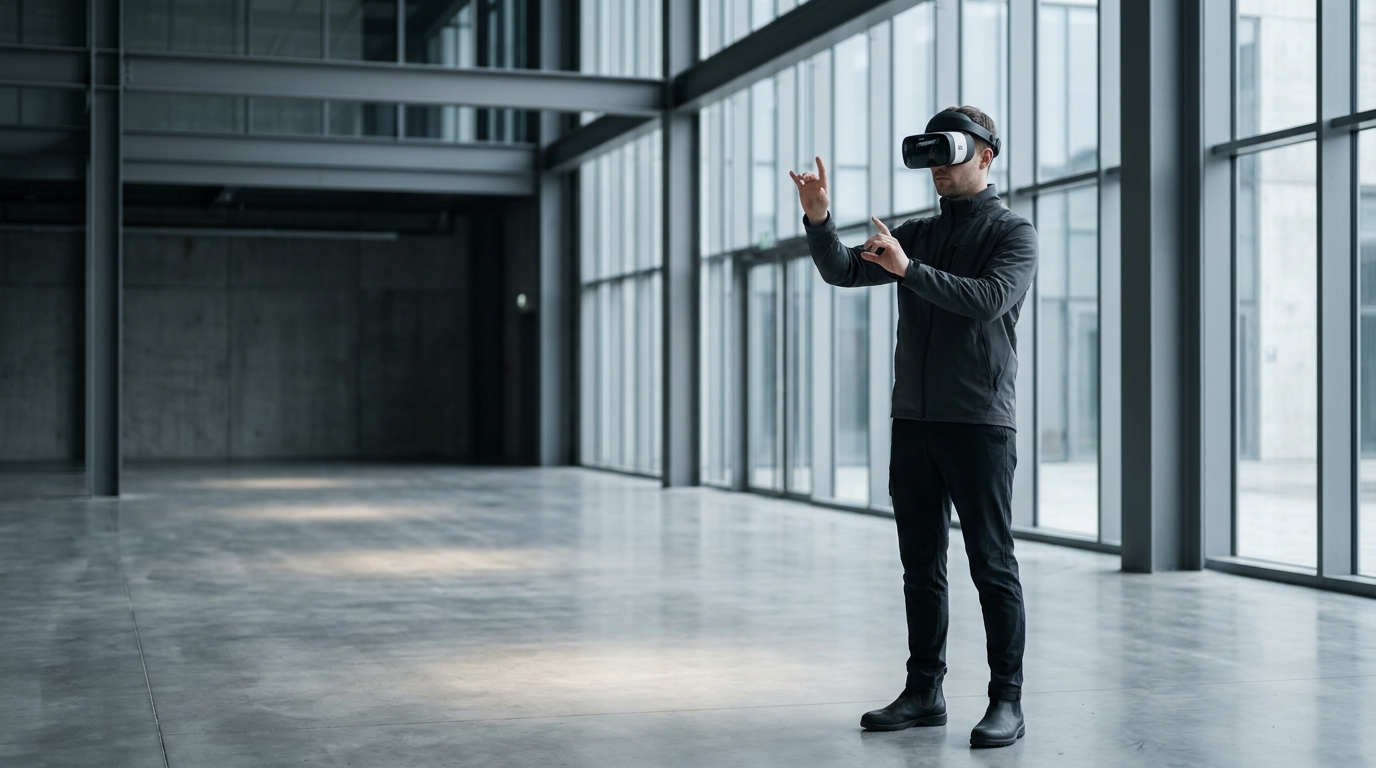
La formation en réalité augmentée réduit de moitié la durée de montée en compétence, triple la rétention et permet de répéter sans risque les gestes critiques.
Cinq jours en salle, cinq stagiaires absents de la ligne
Former cinq opérateurs à un poste critique mobilise deux à cinq jours de présentiel. Un formateur expert. Un poste libre pour la pratique. Les opérateurs quittent leurs missions habituelles — la perte de production n'est pas chiffrée sur la fiche de formation, mais elle pèse sur la ligne. Le formateur expert n'est pas toujours disponible. Le poste de pratique non plus. Les stagiaires partent parfois en urgence avant la fin du cycle.
La formation en réalité augmentée et la formation immersive en réalité virtuelle redistribuent ces contraintes. Pas en supprimant le formateur. En lui rendant le geste reproductible, asynchrone, et libre du poste réel.
Trois différences mesurables avec la formation traditionnelle
Le temps de montée en compétence
Une formation présentielle de cinq jours sur un geste industriel délicat tombe, en immersif, à deux à trois jours. L'opérateur reprend une étape autant de fois que nécessaire, sans mobiliser de poste réel, sans interrompre un formateur. La répétition libre du geste consolide plus vite. Sur le terrain, les responsables formation rapportent une réduction de 50 à 60 % du temps de montée en compétence sur les gestes répétitifs ou séquencés.
La rétention de l'information
La rétention par lecture seule plafonne à 20 %. Après une formation pratique en réalité augmentée ou immersive, elle monte à 75 % — et davantage sur certains gestes physiques. La mémoire kinesthésique explique l'écart : voir, toucher, répéter ou comprendre engage le corps, pas seulement l'attention visuelle. La mémoire du geste résiste mieux aux trois à six mois suivant la formation.
La sécurité face aux gestes risqués
Certains gestes ne se forment pas en conditions réelles : intervention sur machine sous tension, ouverture d'un compartiment haute pression, manipulation d'un outillage rare. La réalité virtuelle permet de répéter avant le risque. La réalité augmentée superpose à la machine réelle les indications qui sécurisent l'apprentissage en situation. Le présentiel impose un compromis entre réalisme et sécurité. L'immersif lève ce compromis.
Cas d'usage industriels concrets
Aéronautique — formation aux gestes de maintenance moteur. Sur un programme de qualification, la formation immersive en réalité virtuelle remplace une partie des séances atelier. Les techniciens répètent ouvertures de capot, contrôles d'étanchéité et procédures de couple sans mobiliser un moteur d'instruction. Le passage en pratique réelle s'effectue avec un niveau de confiance supérieur et un temps de supervision réduit.
Automobile — formation au démarrage d'une nouvelle ligne. Lors d'un changement de modèle, plusieurs centaines d'opérateurs doivent monter en compétence en quelques semaines. La formation en réalité augmentée diffuse le geste exact attendu sur le poste, à l'échelle 1. Chaque opérateur avance à son rythme. Le formateur concentre son temps sur les cas difficiles.
Énergie — formation aux interventions sur poste électrique. La consignation, le verrouillage, la mise hors tension forment une séquence à risque où l'erreur est rare mais grave. La formation réalité virtuelle reproduit l'environnement et impose la séquence complète. La répétition sans danger réel ancre le réflexe avant la première intervention sur site.
Points de vigilance
Le présentiel ne disparaît pas. Le geste expert, la culture sécurité et la transmission tacite restent portés par le formateur. La formation en réalité augmentée et la formation immersive complètent le dispositif — elles ne le remplacent pas.
Le contenu pédagogique reste la pièce maîtresse. Un mauvais script en réalité virtuelle ne gagne pas en pertinence parce qu'il s'affiche dans un casque. Sur des sessions longues, le service formation doit prévoir des cycles courts et des pauses : la fatigue oculaire se gère par la structure du module, pas par la technologie.
Le coût initial d'une application de formation immersive sur mesure dépasse celui d'une session présentielle isolée. La rentabilité se calcule sur le volume de stagiaires formés sur deux à trois ans et sur la réduction du temps formateur. Sur 200 opérateurs formés par an, le point d'équilibre se situe généralement entre 12 et 18 mois.
Conclusion
La comparaison entre formation en réalité augmentée et méthodes traditionnelles n'est pas un duel. C'est une recomposition. Le présentiel garde la transmission. L'immersif gagne la répétition. La documentation devient accessoire.
Myxed cadre, prototype, construit et déploie ces dispositifs avec les services formation, sur les cas d'usage où le geste est dense, risqué ou rare. L'objectif : révéler les talents en encourageant l'adoption, pas mécaniser l'apprentissage.
Pour aller plus loin, découvrez notre offre de formation en réalité mixte pour l'industrie, notre formation des opérateurs industriels et notre simulateur de formation maintenance.
Questions fréquemment posées
À l'intention des responsables formation et des services RH.
Sur l'ensemble des sites accompagnés, l'adhésion est large, y compris parmi les opérateurs seniors. La prise en main du casque demande 30 à 90 minutes. Le frein le plus fréquent n'est pas l'âge — c'est la qualité du contenu pédagogique.
Chaque session capte la séquence, le temps passé et les erreurs corrigées. Le service formation dispose d'un dossier individuel par stagiaire, exportable vers le système de gestion des compétences. La traçabilité de la formation est native au dispositif.
La plupart des applications de formation en réalité augmentée ou virtuelle fonctionnent en autonomie sur le casque. Les résultats se synchronisent lorsque la connexion est disponible. Cette architecture convient aux sites isolés et aux ateliers sans Wi-Fi industriel.