XR Headset Comparison for Industry 2026 : Which Headset to Choose ?
Choosing an XR headset is an operational decision. It involves the ergonomics of a workstation, compatibility with the information system, and the deployment budget over several years. A poorly suited HoloLens 2 for a quality control position in a clean room costs more to correct afterward than to frame in advance. This comparison confronts the headsets with real use cases: guided maintenance, hands-free quality control, training for rare gestures, remote assistance. The goal: to identify the model that meets the specific field constraint, whether it is autonomy, weight carried over an 8-hour day, resistance to the industrial environment (dust, temperature, ATEX zones), or integration with the existing information system (ERP, CMMS, MES).
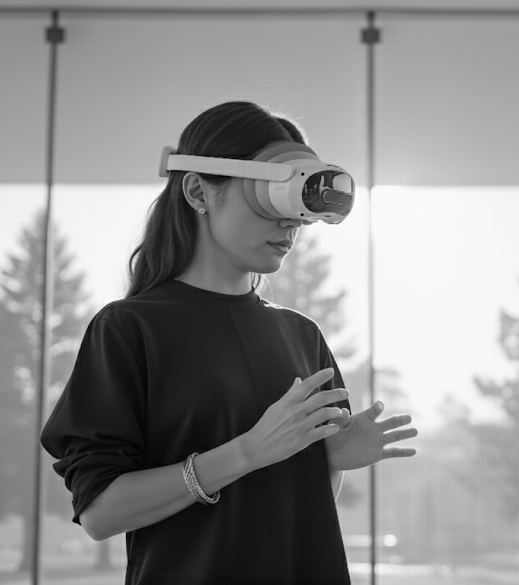
XR Headset Comparison for Industry 2026
This comparison covers the 5 most relevant platforms for industrial users in 2026: Microsoft HoloLens 2, Apple Vision Pro, Meta Quest 3, Meta Quest 3S, and RealWear Navigator 520. For each, 12 criteria evaluated and a recommendation per use case.
Suitability for the use case
XR Headset Comparison for Industry 2026
Total cost of ownership
The 5 industrial XR headsets evaluated in this comparison
This comparison covers the 5 most relevant platforms for industrial users in 2026: Microsoft HoloLens 2 (~$3,500), Apple Vision Pro (~$3,999), Meta Quest 3 ($549), Meta Quest 3S ($299), and
Enterprise maturity
Complete comparison table — 12 key criteria
Evaluated criteria: field of view (FOV), spatial tracking accuracy, battery life, IP certification, long-term comfort, MDM compatibility, audio quality, weight, unit price, software ecosystem,
XR Headset Comparison for Industry 2026
The 5 industrial XR headsets evaluated in this comparison
This comparison covers the 5 most relevant platforms for industrials in 2026: Microsoft HoloLens 2 (~$3,500), Apple Vision Pro (~$3,999), Meta Quest 3 ($549), Meta Quest 3S ($299), and RealWear Navigator 520 (~$2,000). For each: 12 evaluated criteria, a recommendation per use case, and an analysis of the total cost of ownership over 3 years.
Complete comparison table — 12 key criteria
Evaluated criteria: field of view (FOV), spatial tracking accuracy, battery life, IP certification, long-term comfort, MDM compatibility, audio quality, weight, unit price, software ecosystem, enterprise support, industrial maturity.
Recommendations by use case
Guided maintenance in a clean environment: HoloLens 2. Maintenance in a challenging or ATEX environment: RealWear Navigator 520. Immersive VR training: Meta Quest 3 or Quest 3S. Design review: Apple Vision Pro or HoloLens 2.
Guided maintenance in a clean environment (aerospace, pharma, electronics)
The HoloLens 2 is the undisputed reference for guided maintenance in a clean or semi-clean environment. Its hands-free tracking, precise spatial anchoring (±5 mm), and mature software ecosystem make it the natural choice for aerospace, pharmaceutical, and electronics industries.
Transform your industrial operations
Discover how Myxed deploys tailored solutions for large industrial groups.
Request a demonstrationAll our use casesFrequently asked questions
The most frequently asked questions by our industrial clients.
There is no universal answer. For guided maintenance in a clean environment: HoloLens 2. For maintenance in a challenging or ATEX environment: RealWear Navigator 520. For VR training: Meta Quest 3 or Quest 3S.
For use cases in a clean environment (office, training room, showroom), yes. For uses on an industrial site (workshop, factory, construction site), no: the lack of IP certification and the fragility of consumer equipment are deal-breakers.
Yes, and it is often the optimal strategy. Example: HoloLens 2 for expert maintenance technicians, RealWear for operators in ATEX zones, Quest 3S for classroom training, tablets for supervisors.
No, if you have an operational need today. The HoloLens 2 remains a mature and cost-effective solution. Waiting for a hypothetical new generation in 12 to 18 months means missing out on gains.