Design review: validate a product without multiplying physical prototypes
A design review takes place in front of a screen. The real volume of a part, the clearances, the operator's posture are hard to judge on a flat view. The flaw shows up on the first physical prototype. At that stage, fixing it means reworking the tooling, rebooking a workshop slot and adding weeks to the project. In a design review in virtual reality, the team examines the digital model at full scale, before manufacturing begins.
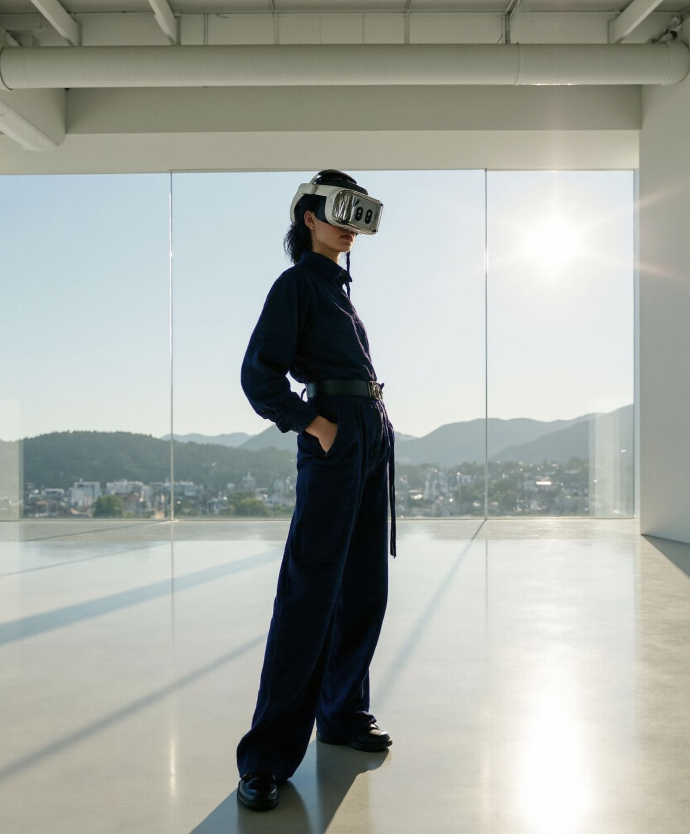
What is a design review?
A design review brings the teams involved around a model, at a project milestone. Together, they validate geometry, assembly, ergonomics and manufacturability before they launch a prototype. Two stages matter: the preliminary design review frames the choices, and the critical design review freezes the definition before industrialisation.
Teams run this review in front of a screen. In virtual reality, they run it on a full-scale digital model.
On-screen reviews that let costly flaws through
On a screen, everyone reads perspective their own way. A housing that blocks access to a screw, a hatch set too low, a harness that rubs against an edge: these flaws are hard to read on a flat projection.
The cost comes later. The first prototype reveals the problem. The design office starts another iteration, remakes a part, books another slot. A fix costs more at each stage it clears: at the design office, then on assembly, then at the customer's site.
Teams also work across several sites. The design office here, production somewhere else, the supplier somewhere else again. Bringing everyone around the same model means travel, or a review degraded by video call.
The design review in virtual reality: the full-scale model
In a design review, the teams gather around a model to validate geometry, assembly and ergonomics before they launch a prototype. The review in virtual reality pursues the same goal on a different medium. The team examines the digital model at full scale, headset on, in a scene that reproduces the workshop or the workstation.
Myxed loads the model into the 3D scene. Participants walk around the part. They stand where the operator will work. They open a hatch, check a clearance, measure a height.
Virtual reality places the team inside a fully modelled environment. Mixed reality overlays the model onto the real workstation. Myxed composes the setup according to the review to run.
How a design review in virtual reality unfolds
A typical session follows four steps.
01 Prepare the digital model
Myxed retrieves the design files, native or neutral, and prepares the model for real time. The assembly tree and the part names stay in place. The team keeps its bearings.
02 Bring the teams together, on site and remote
Design office, methods, production and supplier join the same session. Some are in the room, headset on. Others connect from another site. All see the same model, in the same place, at the same scale.
03 Review, annotate, decide
The team inspects the assembly and moves to the operator's station. Each comment carries an author, a date and a precise location on the model. The team decides in front of the object, not from a written report.
04 Export the decisions to your tools
The annotations and the action items go to the tracking tool or the PLM. The design office works through the list part by part. It keeps a trace of every decision, from the review to the fix folded into the model.
On the reviews Myxed runs, the recurring friction point is access to design files in the design office's native formats. For a review tied to the CAD chain and the PLM, see the CAD design review in mixed reality.
What the immersive design review makes possible in practice
Four situations recur in design offices: judging ergonomics and tool access, finding assembly interferences, checking layout, bringing scattered teams together.
Validate ergonomics and tool access before the prototype
An operator has to reach a screw, plug in a connector, pull out a filter. At full scale, the team settles the question in a few minutes. The designer steps into the operator's place. They check the arm angle, the visibility, the room for the wrench. They fix the access flaw on the model, before any manufacturing.
Detect interferences and assembly problems
The immersive review shows the collisions and the tight assembly zones. The team replays the assembly order by hand. It spots a part that only fits when forced before the prototype, rather than on the line.
Check the layout of a line or a workstation
The review is not only about the part. The team walks the future line at full scale, checks the traffic paths, the distances between stations, the access to maintenance areas. It carries the corrections onto the plan before the line goes up.
Bring design teams together across several sites
Design office, methods, production and supplier join the review from their own site. The team decides in one session instead of several rounds of file exchange. Each annotation stays attached to its part and its version. Travel serves the stages that warrant it. See also the overview of industrial uses of virtual reality.
Integrate the immersive design review into your design chain
- Annotations and decisions sent back to your project tracking tool or your PLM.
- Sessions on PC-tethered or standalone headsets, on your network, under your IT security rules.
- Named accounts and a review history, version by version.
Importing design formats, preparing the model for real time and the detailed PLM link belong to the CAD design review in mixed reality. A demonstration takes a few days to set up. An industrialised review, connected to the PLM and built into your project milestones, calls for broader framing.
When virtual reality is not the right answer
- The part is simple and reads well on a drawing or a standard 3D view.
- The review is about dimensions and tolerances, not about volume or ergonomics.
- The real need is a physical test: load, material behaviour, thermal response. The virtual scene does not reproduce them.
- The operator has to learn in contact with the machine, not on a model. Mixed reality training keeps the operator in front of the equipment and lays the instructions over it.
The immersive review complements physical tests, it does not replace them. It reduces the number of iterations before the first prototype, not the final validation on a real part.
Measure the effect on the design cycle
A flaw caught at the model stage avoids a design rework later. The size of the gain depends on the cost of a prototype in your sector and the number of iterations avoided.
The project team chooses the indicator with Myxed, before development. A few markers:
- number of physical iterations before validation,
- number of late changes after release to manufacturing,
- time between the review and the fix folded into the model,
- cost of travel tied to multi-site reviews.
A before-and-after on one of them, measured with the project's own data, is worth more than an average. To lay out the calculation, see the return on investment of a digitalisation project.
Frame, prototype, build, deploy
Frame. Identify the reviews concerned, the teams present, the recurring flaws and the exit point to the PLM.
Prototype. Load a real model, run a test session with your designers, judge the contribution on a concrete case.
Build. Develop the custom setup, wire the design formats and the PLM link, set the roles and rights with the IT department. See virtual reality application development.
Deploy. Build the immersive review into the project milestones, train the teams, follow the first reviews and adjust with the feedback.
Frequently asked questions
The design review in virtual reality, in practice.
A first test review takes two to four weeks to set up from an existing model. An industrialised review, connected to the PLM and built into the project process, calls for framing with the design office and the IT department, over several months depending on scope.
Application development is the main cost item, ahead of hardware. The number of design formats to integrate, the level of PLM link and the number of sites move the figure. Myxed hands over a costed scope at the end of the framing stage, before any commitment.
The choice depends on the review: visual precision, number of participants, IT security rules. Varjo, Apple Vision Pro and standalone headsets cover different needs. Myxed stays hardware-agnostic and selects the headset according to the project.
No. The immersive review joins the existing chain. Designers model in their own tool. You export the model for the review, the decisions come back into the PLM. You add a validation step to the design process.
Going further
The immersive design review shortens the loop between the idea and the validation. It takes the ergonomics flaw out of the physical prototype and brings it back to the model stage, where the fix costs the least. It gathers the teams around the same object, at the same scale, whatever their site.
Describe the review you run today. Myxed frames a first immersive review with you, from a model you supply.
Explore: industrial uses of virtual reality · enterprise virtual reality · the spatialised digital twin